
Experts at Korea’s Daegu Gyeongbuk Institute of Science have developed a prototype nuclear battery that could power devices for up to several thousand years, thanks to the carbon isotope C-14 and the latest technology. The developers assure that the product is safe and has the potential to revolutionize the energy market.
A team of researchers led by Professor Su-Il Ina from Daegu Gyeongbuk Institute of Science and Technology has unveiled a prototype of a betavoltaic battery built on a radioactive carbon isotope – C-14, also known as radiocarbon. The discovery was presented at the spring meeting of the American Chemical Society 2025, held March 23-27.
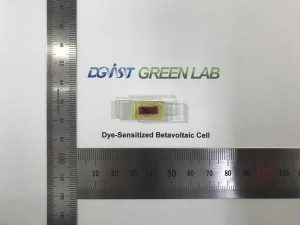
Source: www.acs.org
The battery has the potential to operate for several thousand years thanks to C-14’s half-life of 5,730 years. A prototype based on ruthenium-enriched titanium dioxide achieved an increase in energy conversion efficiency from 0.48 to 2.86 percent. The device generates 20.75 nW per sq. cm, which needs further optimization to power larger devices. The technology has the potential to revolutionize energy markets, eliminating the need to charge devices and reducing environmental impact.