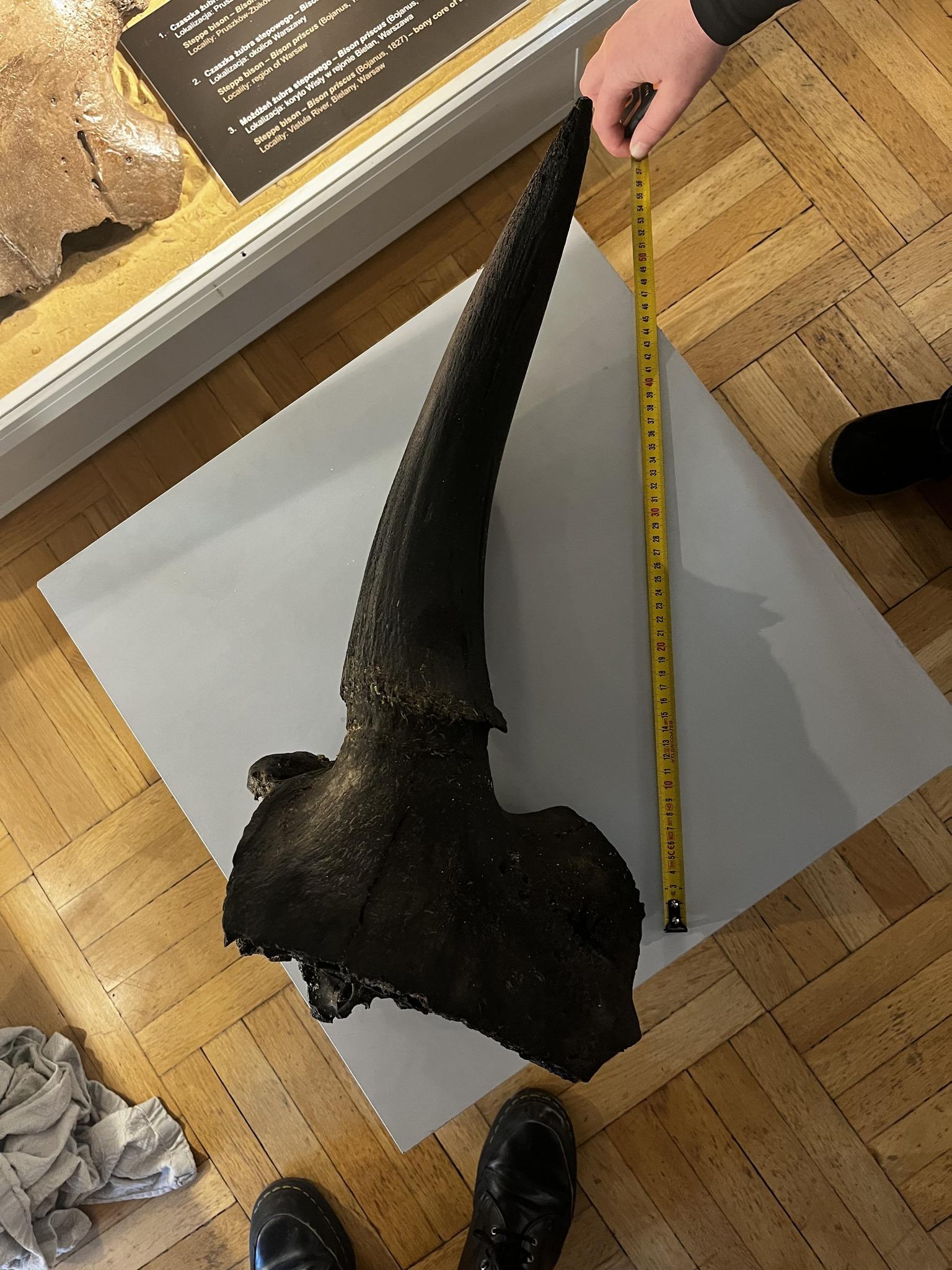
An extraordinary paleontological discovery was made in the Vistula River. Marcel Wroński, a fifth-grade student from Zaborów (Masovian Voivodeship), found in the river a fragment of the skull of an extinct steppe bison, Bison priscus — the ancestor of today’s European bison. Thanks to the keen observation and knowledge of the young discoverer, as well as the low water level in the Vistula, the valuable specimen was transferred to the Earth Museum in Warsaw.
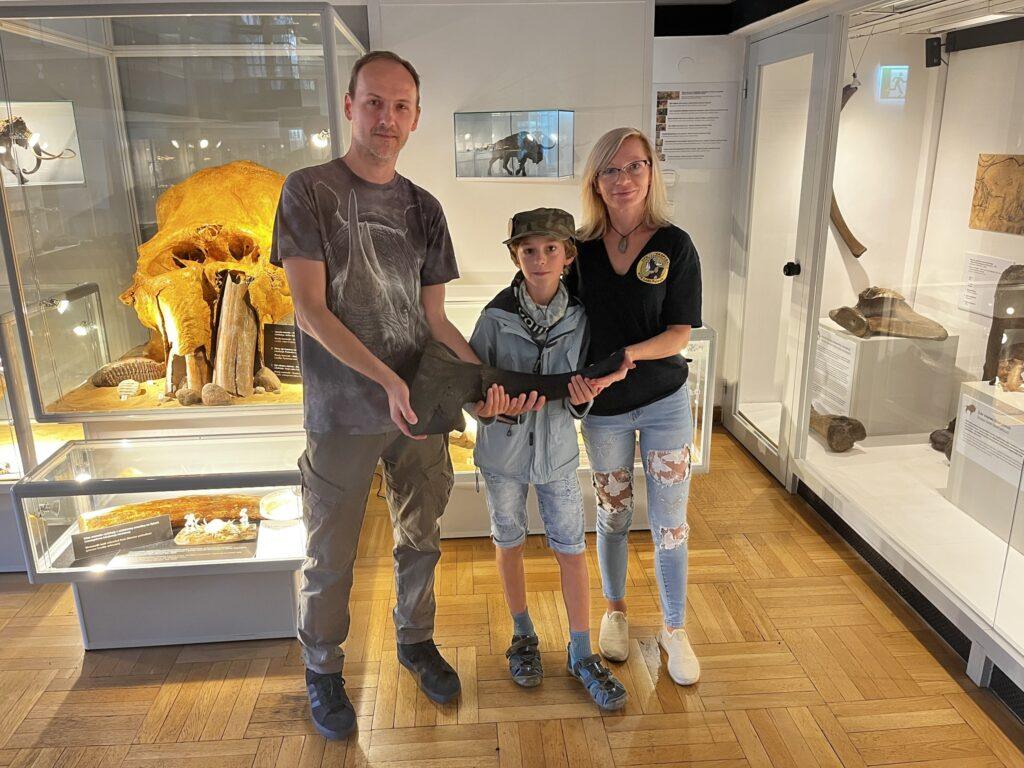
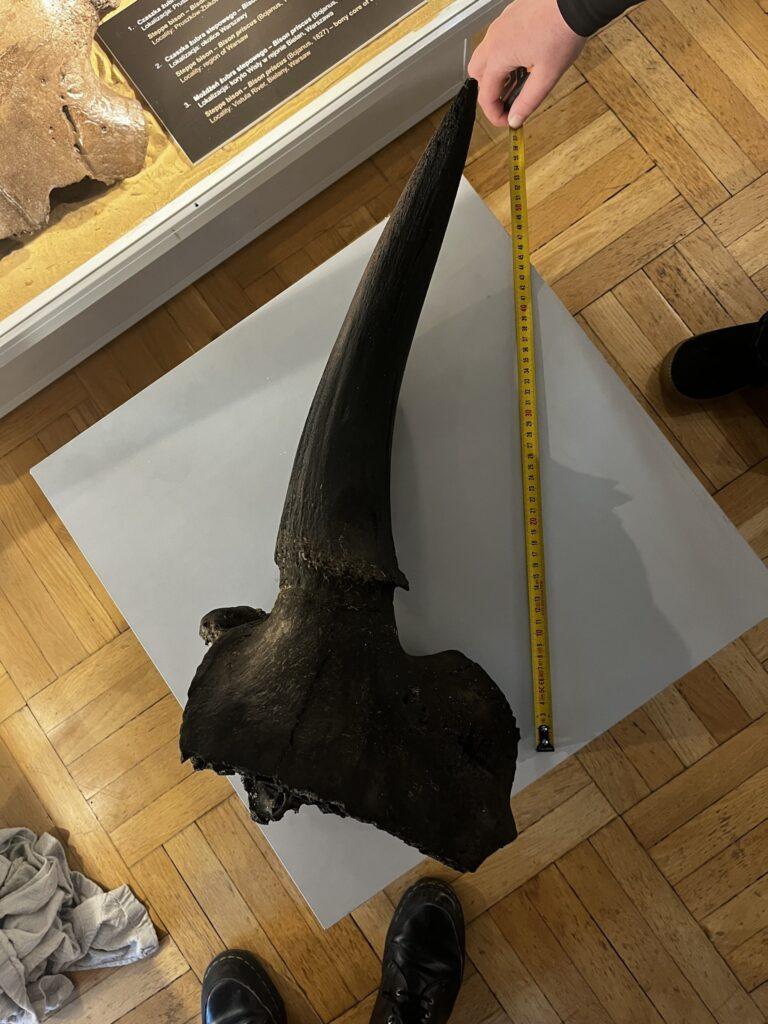 Photo: Earth Museum in Warsaw
 Initially, it was thought that the find might be the remains of an extinct aurochs, but detailed analyses conducted by the Earth Museum staff confirmed that it is part of the skull of the steppe bison. Experts emphasize that the discovery is of great scientific importance because the remains of this species are rare and provide an important source of knowledge about Pleistocene fauna.
The skull will undergo conservation work and then be made available to the public in an exhibition.
Steppe bisons inhabited Europe during the Pleistocene, living in large herds until the end of this epoch. Small populations survived into the early Holocene. About 120,000 years ago, this species interbred with the aurochs, giving rise to the modern European bison (Bison bonasus) — a symbol of Polish nature.