
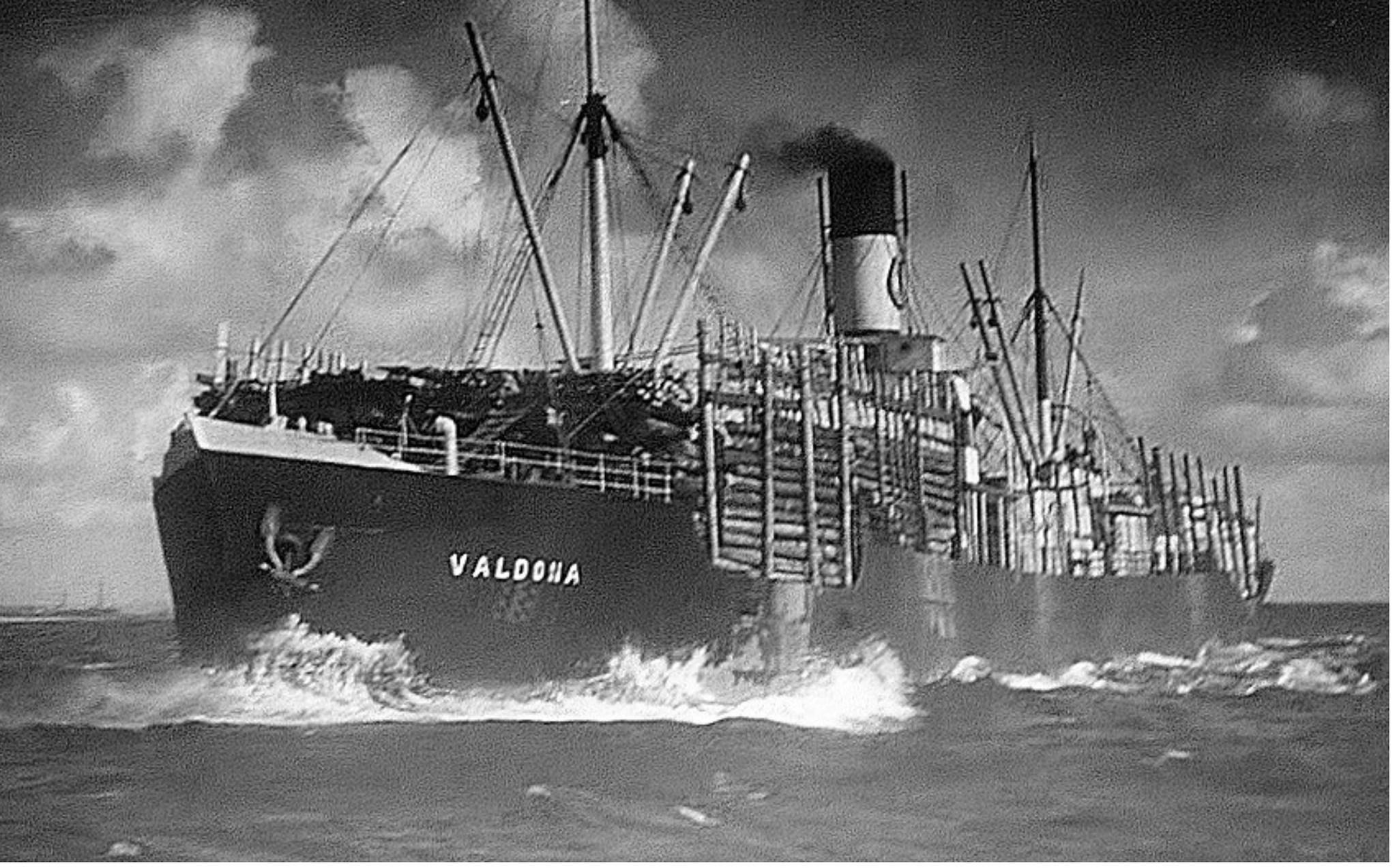
A team of technical divers from Baltictech, which has specialized for years in exploring World War II shipwrecks, has made a remarkable discovery on the floor of the Baltic Sea. This time, at a depth of about 90 meters, they located and identified the wreck of the German steamer Baltenland. The vessel took part in the largest evacuation operation in history—Germany’s Operation Hannibal, carried out in the final months of the war.
The wreck lies north of Ustka, outside Polish territorial waters. According to expedition leader Tomasz Stachura, access to the site was made possible through years of historical research, analysis of military reports, and the perseverance of the entire team. For decades, the location had been marked on maps merely as a fishing snag. Only now, thanks to advanced equipment and the divers’ experience, has its true identity been confirmed.
Conditions on the Baltic seabed were exceptionally difficult—limited visibility, the presence of hydrogen sulfide, and large amounts of fishing nets made the exploration challenging. Nevertheless, the divers managed to find remnants of military cargo: ammunition, equipment, spare parts, gas masks, tires, and fragments of aircraft propellers. The discovery not only confirms the vessel’s role in supplying the Eastern Front, but also provides a better understanding of the scale of German logistics in the war’s final months.
The Baltenland was a 103‑meter-long steamer built in 1904 in Suderland. She regularly sailed the Kiel–Gdynia route, transporting supplies for German forces and evacuating civilians from East Prussia. In December 1944, during one of these voyages, the vessel was sunk by a Soviet submarine. According to German reports, the entire crew was rescued by escort ships, but a massive explosion of onboard ammunition led to the complete destruction of the ship.
The discovery of the Baltenland is another step in Baltictech’s ongoing mission to document wrecks of ships involved in Operation Hannibal—the massive evacuation of German civilians and military personnel that transported more than 2 million people in just a few months. The Gdańsk-based team had previously located the wrecks of ships including the Karlsruhe, Frankfurt, Orion, and Gerrit Fritzen.
The Baltictech group is also known for leading the long-running expedition “Santi Find the Eagle,” which aims to locate the wreck of the legendary Polish submarine ORP Orzeł.
Source: Science in Poland