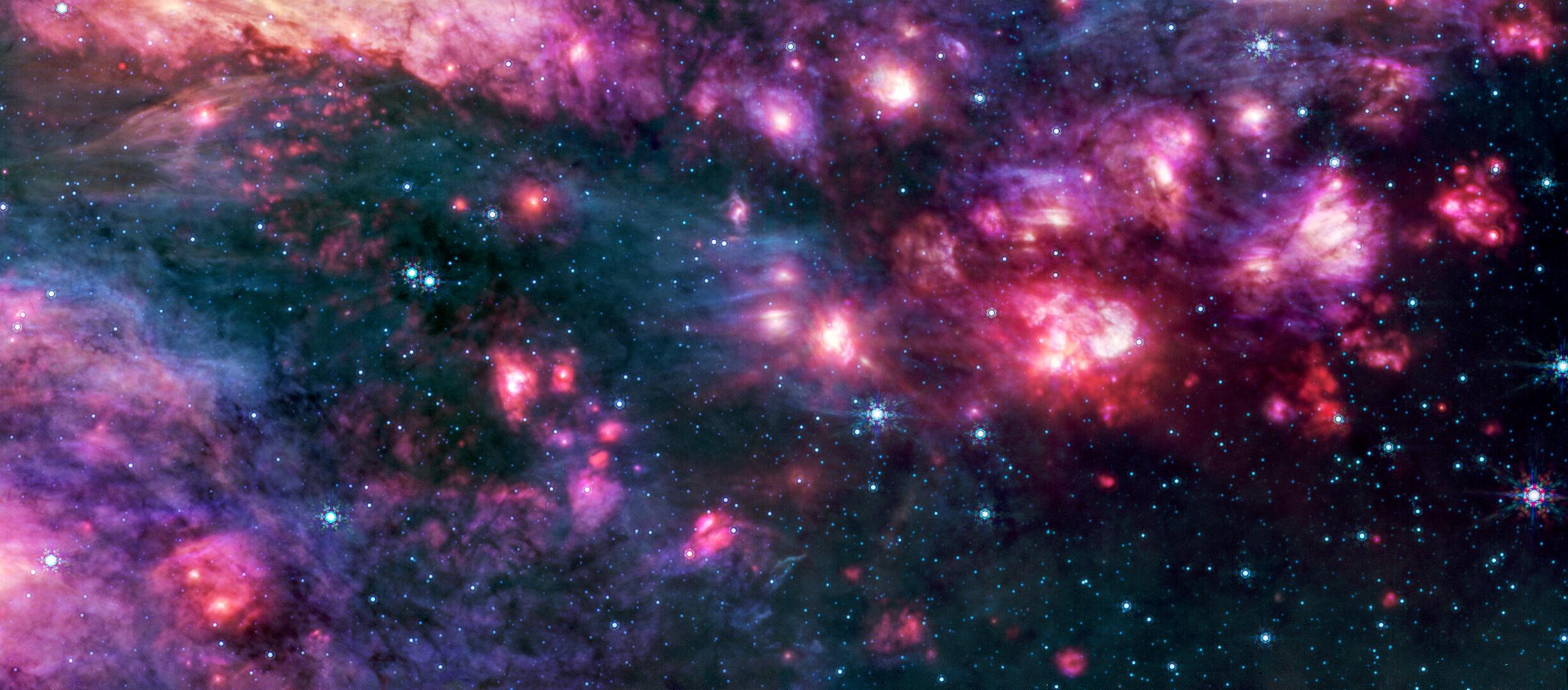
The James Webb Space Telescope (NASA/ESA/CSA) has provided extremely detailed images of the largest and most active star-forming cloud in our galaxy, Sagittarius B2.
This vast gas and dust complex, located just a few hundred light-years from the supermassive black hole Sagittarius A* at the center of the Milky Way, is responsible for the formation of as much as half of the new stars in this area, even though it contains only about 10% of the gas available there.
Images obtained with Webb’s instruments – NIRCam (near-infrared camera) and MIRI (mid-infrared camera) – have allowed us to look deep into the region, revealing both clusters of young stars and dense dust clouds that serve as “cocoons” for those yet to be born. The particularly interesting Sagittarius B2 North region has proven to be one of the most molecularly rich places in the Galaxy, and now, for the first time, it has been possible to see it with such clarity.
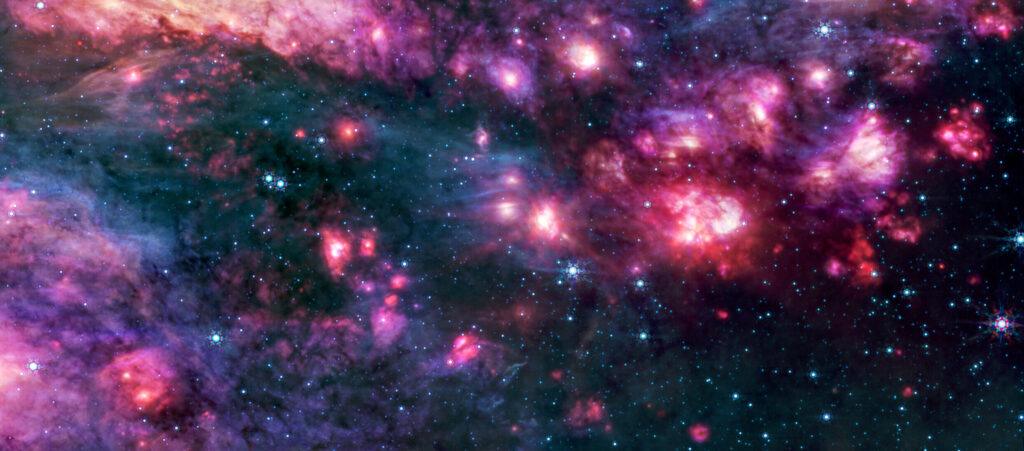
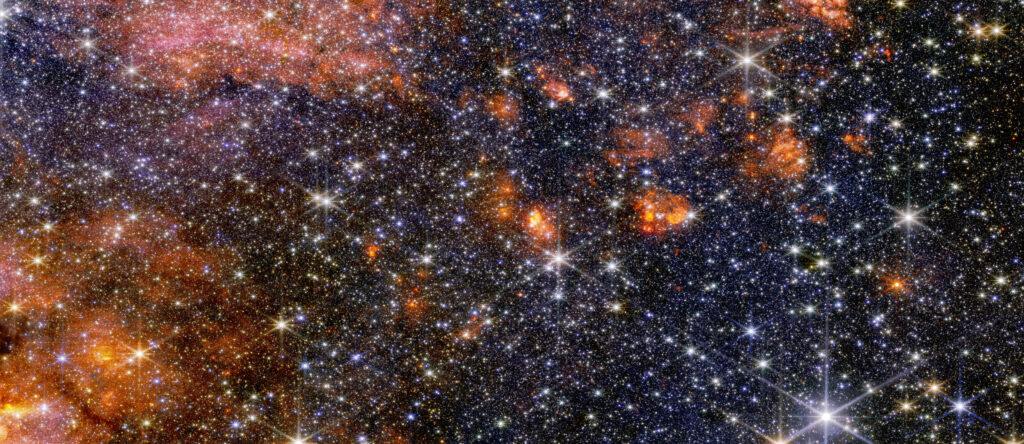
The images also reveal an intriguing contrast: in mid-infrared light, heated cosmic dust and young massive stars are clearly visible, while in near-infrared light, colorful stars come to the fore and gas clouds remain in the background.
Astronomers hope that further analysis of data from the Webb Telescope will answer the question of why Sagittarius B2 is so extremely efficient at creating stars. Although it has only 10% of the gas available in the center of the Galaxy, it produces as much as 50% of the new stars in this region. It is still unknown whether this process has been going on for millions of years or whether it was initiated relatively recently.
The James Webb Telescope is the largest and most powerful space observatory in history. It was created through a collaboration between NASA, the European Space Agency (ESA), and the Canadian Space Agency (CSA). ESA was responsible, among other things, for launching the telescope on an Ariane 5 rocket and co-developed the NIRSpec spectrograph and half of the MIRI instrument.