
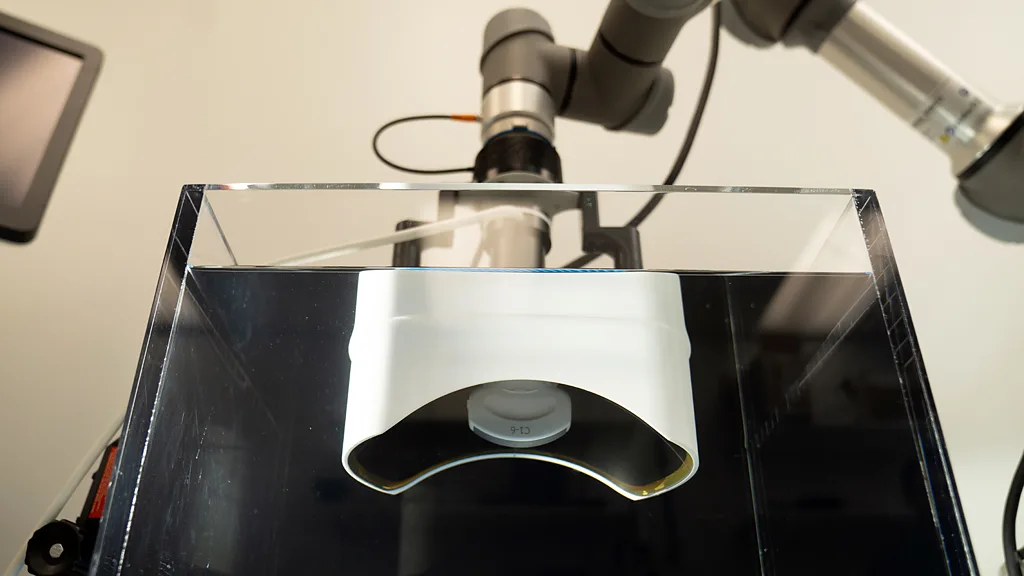
Ultrasound has been used for decades in medicine as a noninvasive diagnostic tool. Today, however, this well-known technology is advancing to an entirely new level—becoming an effective weapon against cancer. Thanks to the groundbreaking histotripsy method, doctors can now remove tumors without scalpels, chemotherapy, or radiation therapy.
The method was developed by Prof. Zhen Xu from the University of Michigan. Her discovery was accidental—made during experiments with high-frequency ultrasound waves on animal tissues. Increasing the number of ultrasound pulses to quiet the laboratory noise led to an unexpected effect: within just a minute, a hole appeared in the tissue. This marked the birth of a technology that is now transforming oncology.
Histotripsy involves focusing ultrasound waves into a very small area of the tumor—about the size of a marker tip. The pulses create microbubbles that rapidly expand and collapse, mechanically breaking down the cancerous tissue. The body’s immune system then assumes the role of “cleaner,” removing the remains of cancer cells. The entire procedure is quick, non-toxic, and noninvasive: patients usually go home the same day.
The technology was approved by the U.S. Food and Drug Administration (FDA) in 2023 for the treatment of liver cancer. A year later, the United Kingdom became the first country in Europe to launch a pilot NHS program using histotripsy. Clinical trials indicate that the method achieves 95% technical success in removing liver tumors, with rare complications.
Histotripsy is not the only ultrasound-based cancer treatment. For years, High-Intensity Focused Ultrasound (HIFU) has been a well-established treatment that works by heating and ‘cooking’ cancer cells. Used, among other applications, for prostate cancer treatment, it offers surgery-comparable outcomes with significantly faster recovery.
New studies also show potential for combining ultrasound with other therapies such as drugs, radiotherapy, or immunotherapy. Ultrasound pulses can temporarily open the blood-brain barrier, allowing drugs to reach hard-to-access tumors. They can also enhance the effectiveness of radiotherapy and sensitize tumors to the immune system’s attack.