NASA’s heliosphere probe launched on Wednesday from the Kennedy Space Center (KSC) in Florida, USA. Among other things, the spacecraft carries a Polish instrument for studying solar wind.
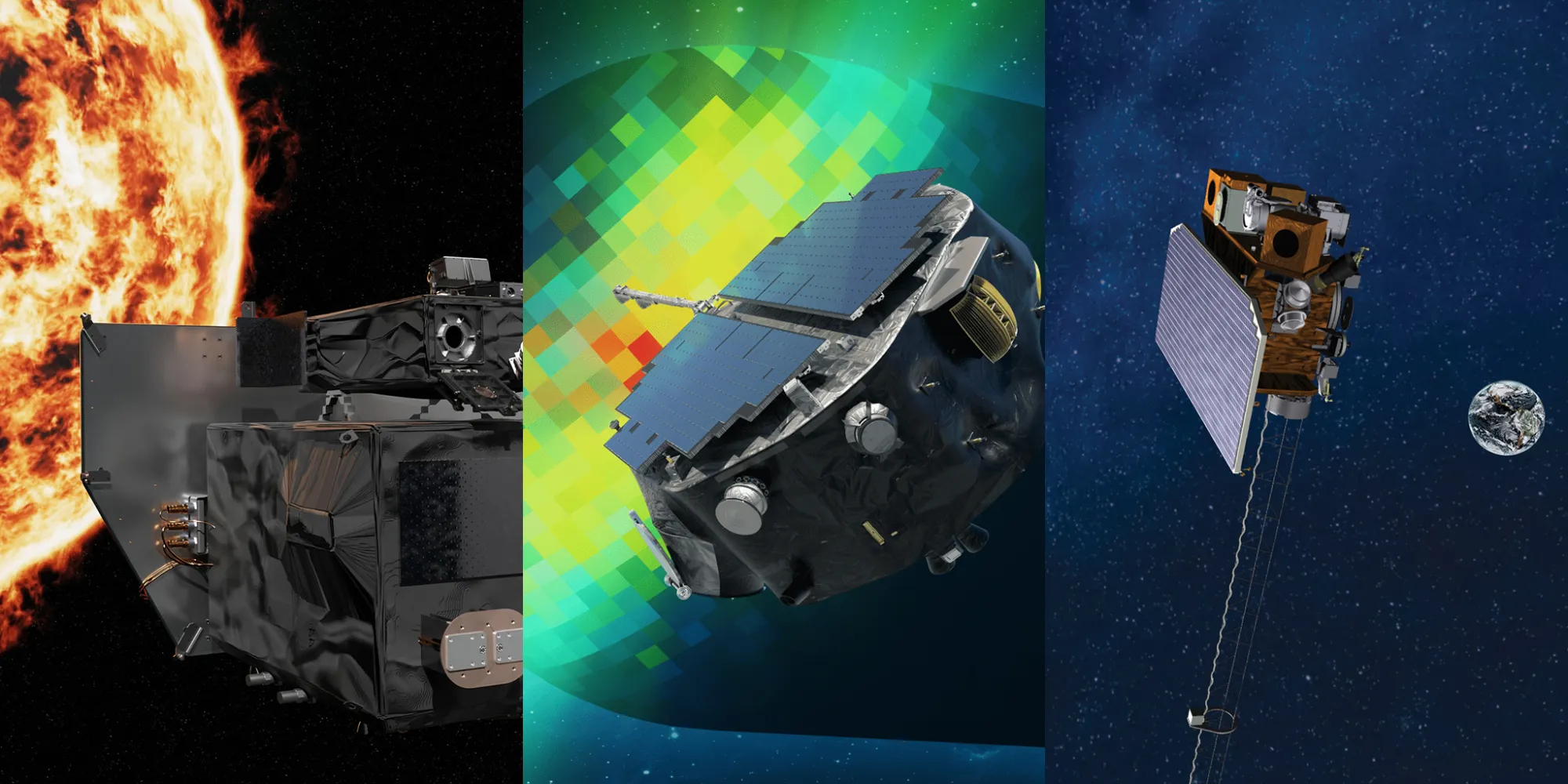
SpaceX’s Falcon 9 rocket carrying NASA’s Interstellar Mapping and Acceleration Probe and its two missions: NASA’s Carruthers Geocorona Observatory and the National Oceanic and Atmospheric Administration (NOAA) Space Weather Follow-On Lagrange 1 (SWFO-L1) spacecraft, launched on Wednesday at 1:32 p.m. Polish time. IMAP will help investigate two important scientific questions in the heliosphere: the acceleration of energetic particles and the interactions of the solar wind with the local interstellar medium.
The mission will use 10 scientific instruments to compile a comprehensive picture of what is happening in space – from high-energy particles from the Sun, through magnetic fields in interplanetary space, to the remnants of exploded stars. One of these devices is the Polish instrument GLOWS (GLObal solar Wind Structure), a photometer designed and manufactured at the Space Research Centre of the Polish Academy of Sciences.
The device will study the structure of the solar wind – it will observe the glow in the far ultraviolet. It will record photons (i.e., elementary particles, quanta of light) with a wavelength of 121.5 nanometers, known as Lyman-alpha. This far-ultraviolet band does not reach the Earth’s surface because it is absorbed by the atmosphere. Observations of this wavelength must therefore be conducted in space.