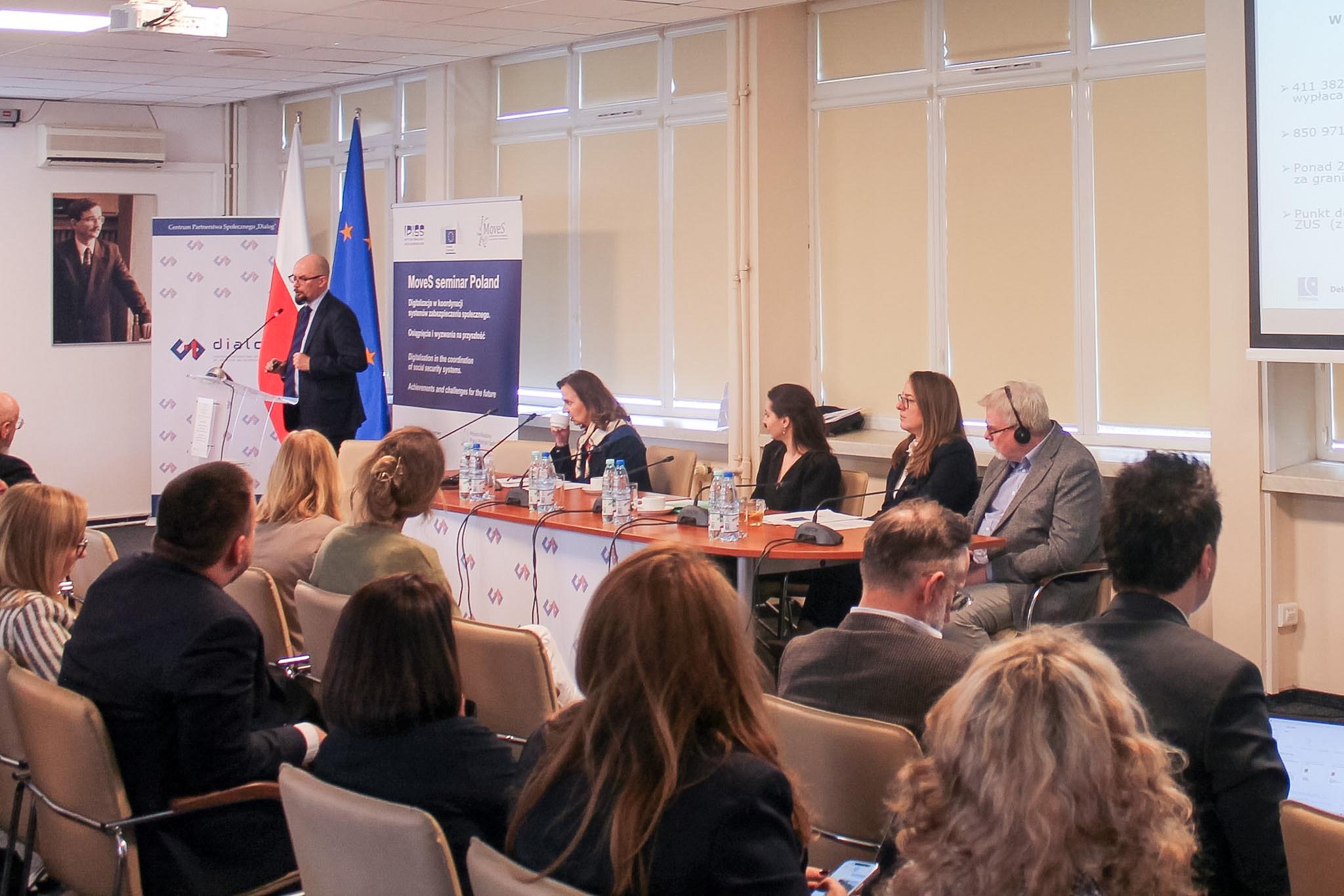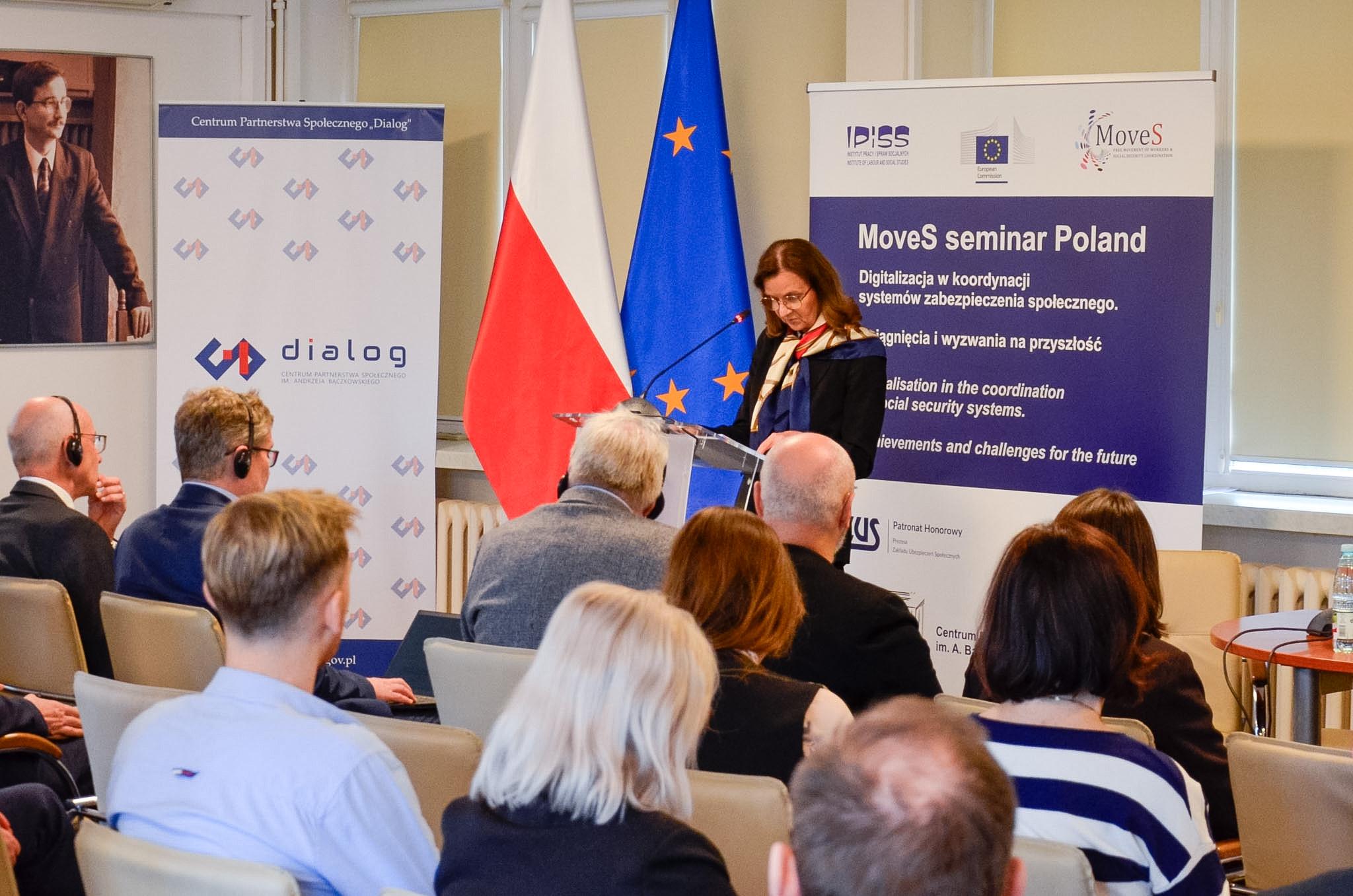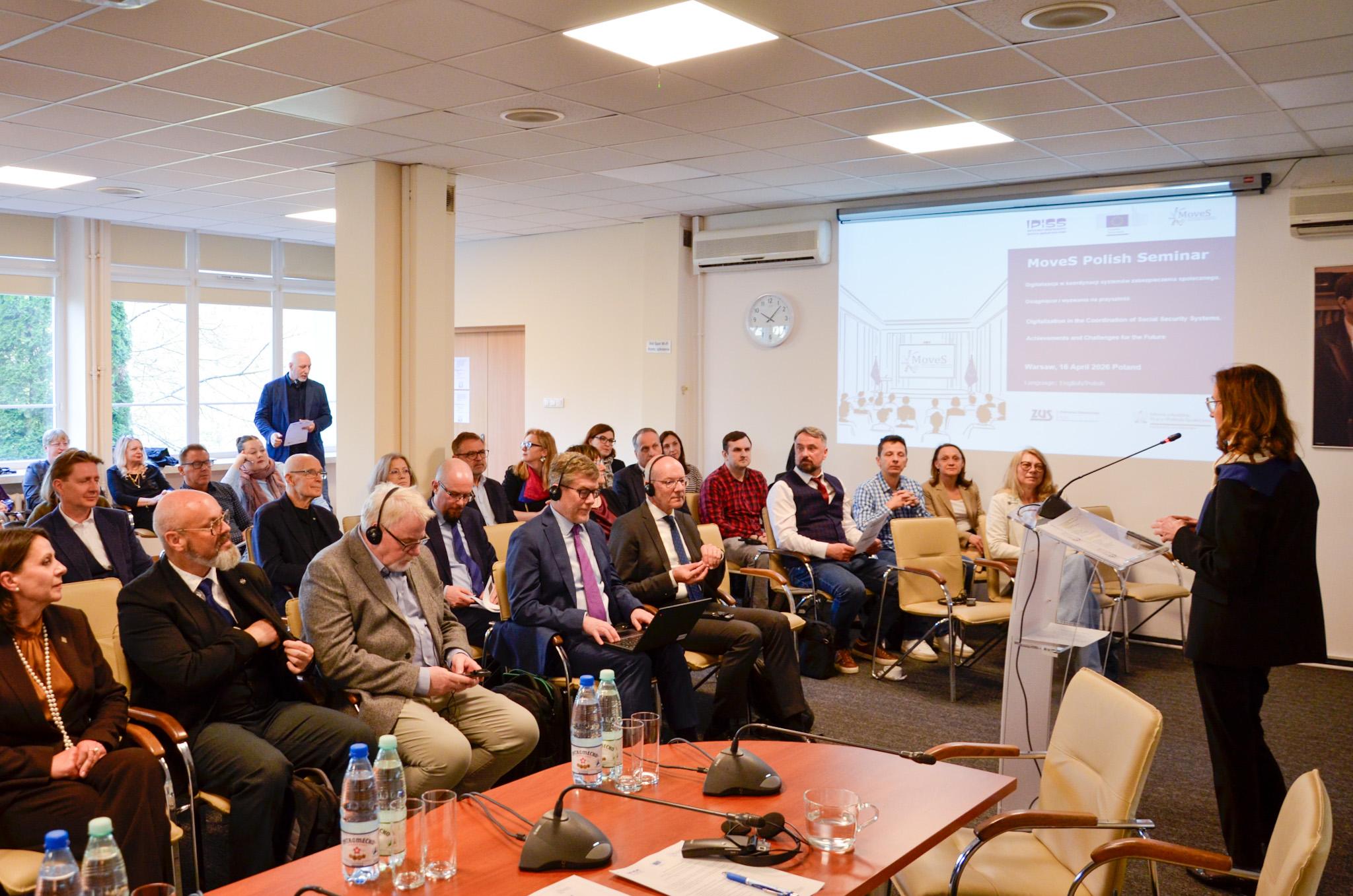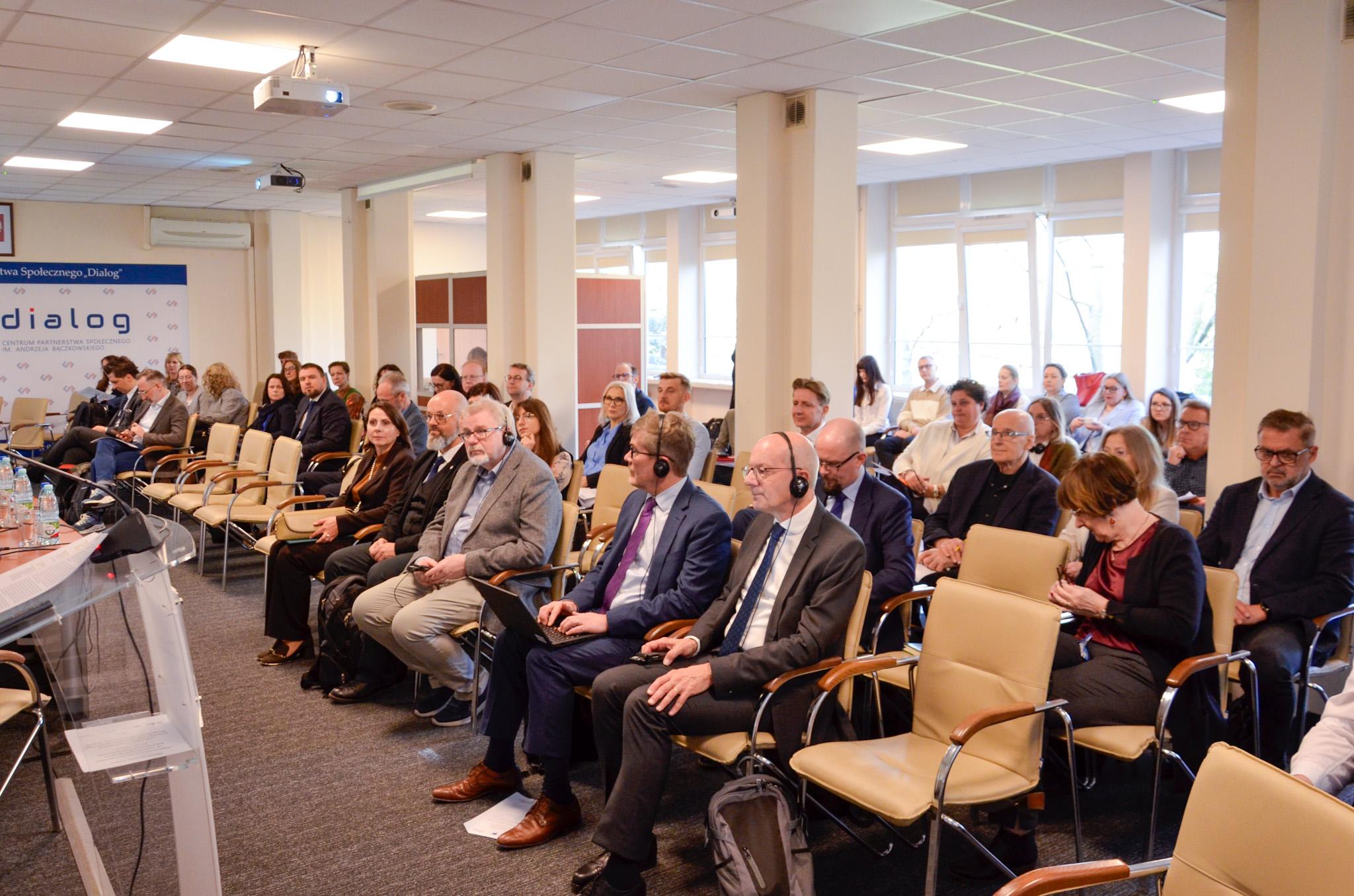
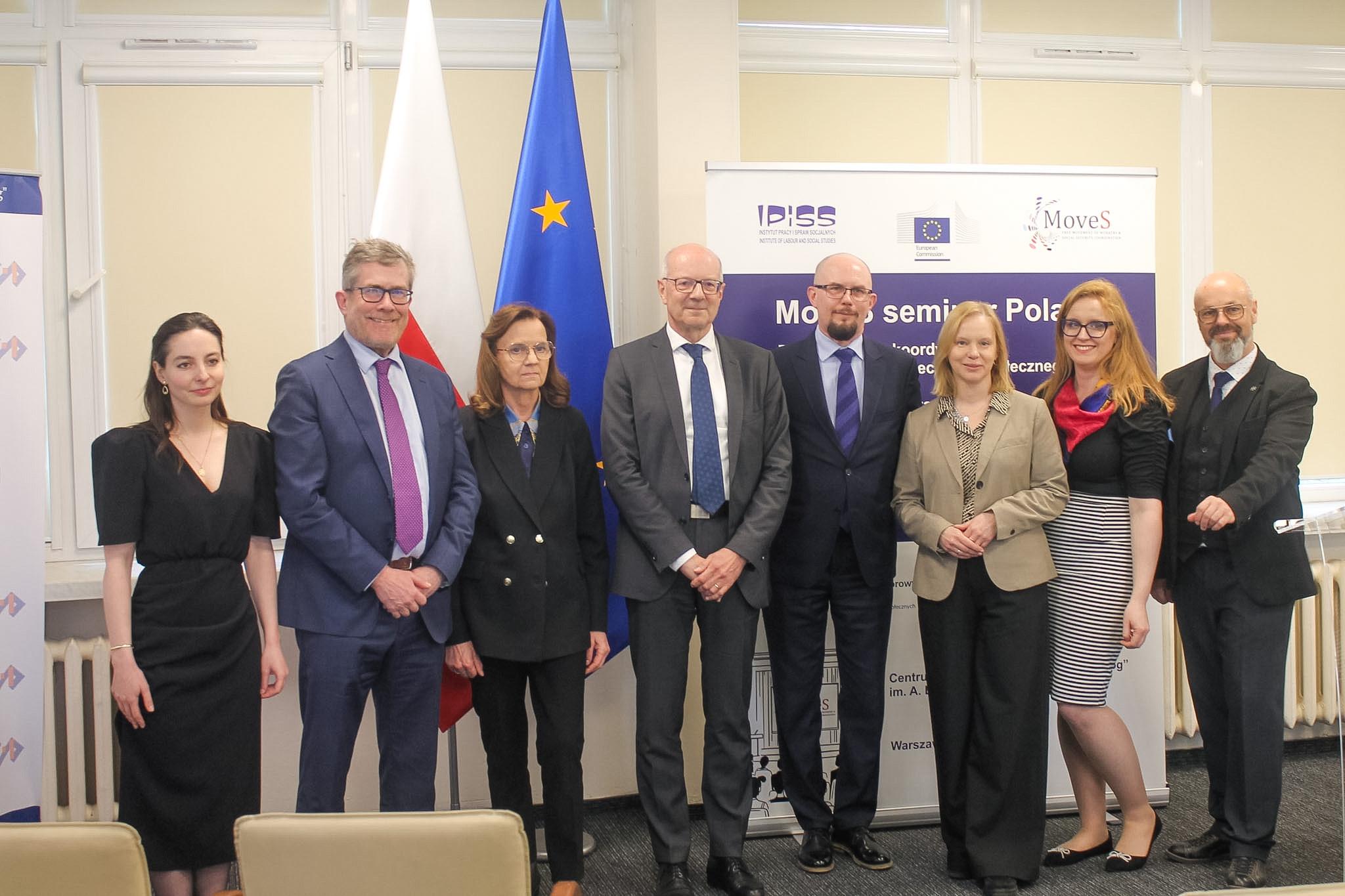
On April 16, 2026, the Dialog Social Partnership Center in Warsaw hosted an academic seminar titled “Digitalization in the Coordination of Social Security Systems. Achievements and Challenges for the Future,” dedicated to current challenges regarding the free movement of workers and the directions of development for the coordination of social security systems in the European Union, with particular emphasis on digitization and electronic processes. The event was organized and led by Prof. Gertruda Uścińska, Ph.D.—Rector of the Nicolaus Copernicus Superior School—and members of the European Commission’s MoveS expert team.
The seminar brought together a wide range of participants, including international experts, representatives of the academic community, judges, employers, trade unions, public administration, and institutions responsible for protecting the rights of persons exercising the freedom of movement within the EU. Participants highlighted the event’s high substantive quality, the relevance of the topics discussed, and the excellent organization.
The seminar was opened by Prof. Gertruda Uścińska with an inaugural lecture in which she emphasized the importance of high-quality academic debate, deepening legal knowledge in the field of European Union law and the free movement of persons, as well as the need for continuous improvement of legal, organizational, and IT mechanisms in the coordination of social security in Europe. Next, Willem Waeyaert presented the objectives and activities of the MoveS network.
The first part of the event featured the latest trends in social security coordination and digitization, discussed by Benoit Abeloos from the European Commission (DG EMPL).
System digitization – the institutional perspective
The second part of the seminar focused on the practical aspects of digitizing social security systems. Presentations by representatives of key public institutions highlighted both past achievements and future development plans:
- Dr. Andrzej Szybkie presented the activities of the Social Insurance Institution (ZUS) in the field of social security, including the development of automation, the use of the EESSI system for data exchange, and the promotion of the process of posting workers using A1 digital instruments,
- Kinga Beda discussed the experiences of the National Health Fund (NFZ), with particular emphasis on its participation in the DC4EU project, as well as national solutions such as e-prescriptions, e-sick leave, e-referrals, and the eWUŚ system and Central e-Registration,
- Dr. Anna Siwierska presented the government administration’s perspective on the coordination of unemployment benefits and family benefits,
- Martin Andresen presented Norwegian solutions, providing an important comparative context regarding the digitization of social security systems.
Panel Discussion – Insights from the Field
The panel discussion focused on the expectations of companies and posted workers regarding digitalization processes and institutional efficiency. Participants debated whether digitalization is a value in itself or rather a tool for improving systems.
Participants in the discussion included representatives from the academic community, public institutions, employer organizations, and labor unions. The panel was moderated by Dr. Marek Benio.
Presentation of a scholarly publication
The seminar also provided an opportunity to present the latest publication from the Nicolaus Copernicus Superior School Press, titled “Issues Related to the Posting of Workers to European Union Countries,” authored by Prof. Mariusz Miąsko and Anna Nieć-Mrzygłód, M.A. (the publication is available online here). The publication represents a significant contribution to the development of research on worker mobility and EU regulations in this area.
The seminar was organized as part of the MoveS project—a network of independent experts from 32 European countries, funded by the European Commission and coordinated by Eftheia with the support of Deloitte.
Thanks to the commitment of Prof. Gertruda Uścińska and the organizing team, it was possible to create a space for a substantive exchange of experiences and views among representatives of various communities.